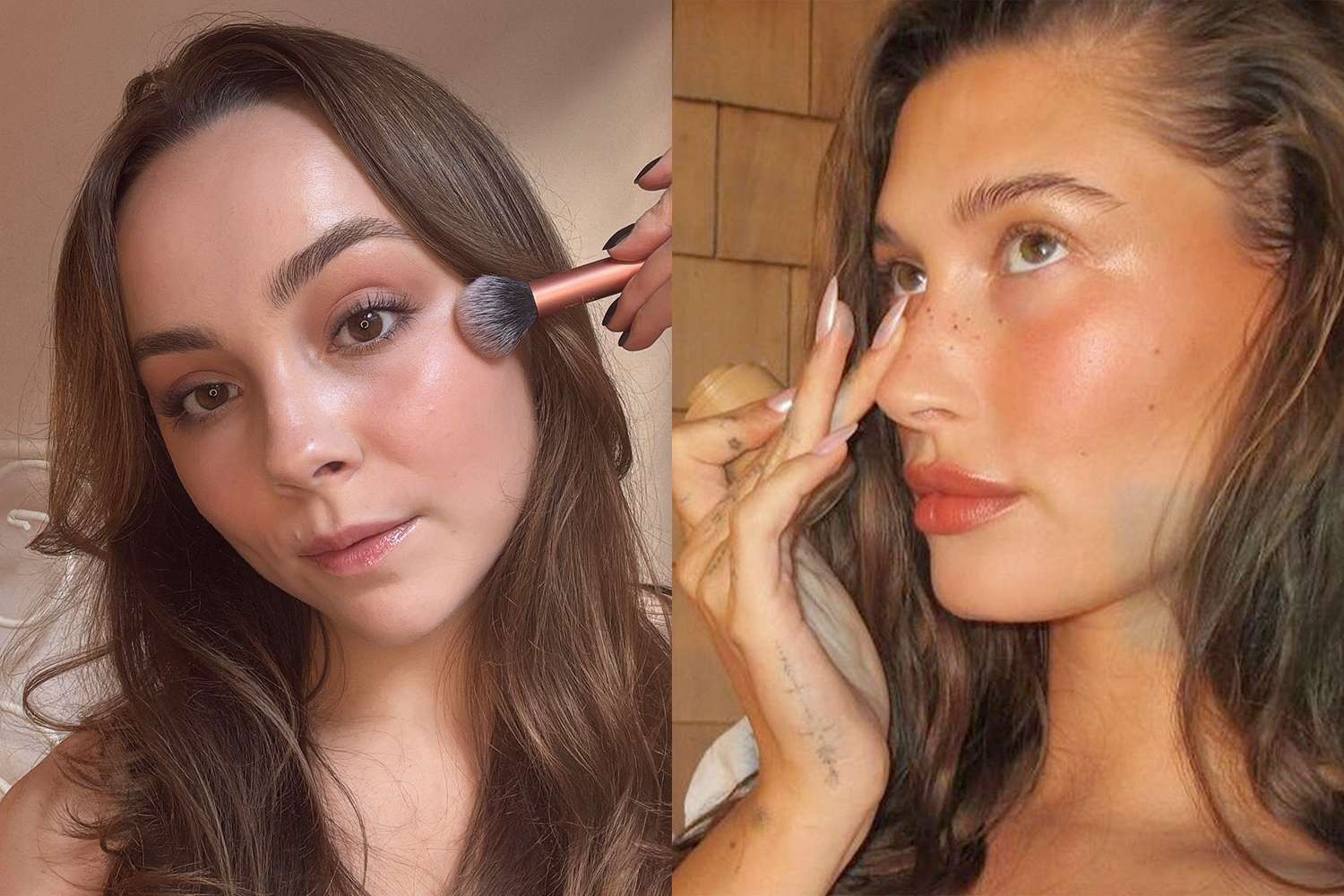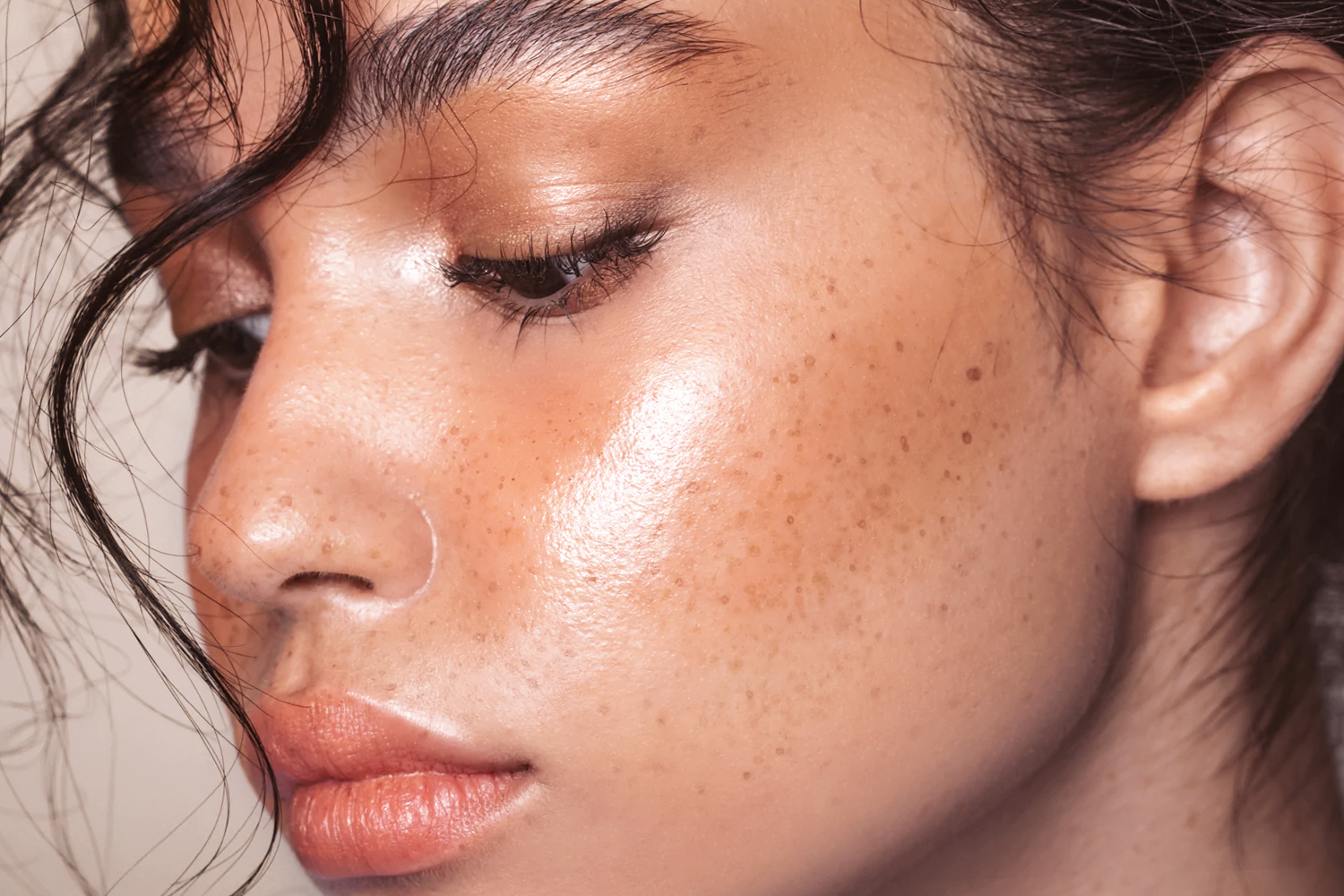
Finding the perfect foundation shade used to feel like a guessing game. In 2026, thanks to smarter formulas, inclusive shade ranges (Fenty now has 50+ shades, and brands like Haus Labs and Saie are catching up fast), and AI-powered tools, it’s easier than ever to get a seamless, undetectable match. Yet 70% of women still wear the wrong shade-leading to that dreaded gray cast, orange oxidation, or patchy finish.
The good news? You don’t need a makeup artist or endless returns. With a few simple steps, you can nail your shade in under 10 minutes-whether you’re shopping online, in-store, or using your phone camera. This comprehensive guide walks you through everything: undertones, skin depth, testing methods, modern tech, and pro tips to make your foundation look like skin, not makeup.
Let’s get you matched once and for all.
Step 1: Identify Your Undertone (The Most Important Part)
Undertone is the color beneath your skin’s surface—warm, cool, or neutral—and it never changes, even if you tan or have hyperpigmentation.
Quick at-home tests:
- Vein test: Look at the veins on your inner wrist in natural light. Green = warm; blue/purple = cool; both or unclear = neutral.
- Jewelry test: Gold flatters warm undertones; silver flatters cool.
- White paper test: Hold a plain white sheet next to your face. If your skin looks yellowish, you’re warm. Pinkish? Cool. Balanced? Neutral.
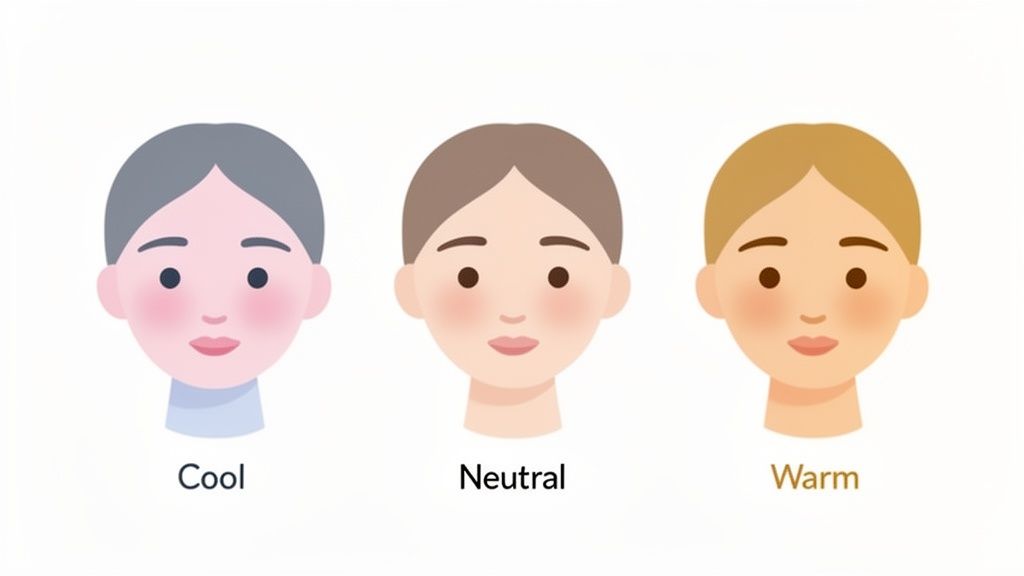
Warm undertones (golden, peach) look best in shades with “golden,” “honey,” or “warm” in the name. Cool undertones (rosy, pink) suit “rose,” “cool,” or “porcelain.” Neutral can wear almost anything but often leans slightly warm or cool.
Pro tip 2026: Many brands now label shades with W (warm), C (cool), N (neutral) right on the bottle—use it!
Step 2: Determine Your Skin Depth (Light, Medium, Deep)
Depth is how light or dark your overall skin is. Match this to the foundation’s base tone.
Common categories:
- Light / Fair
- Light-Medium
- Medium
- Medium-Deep / Tan
- Deep / Rich
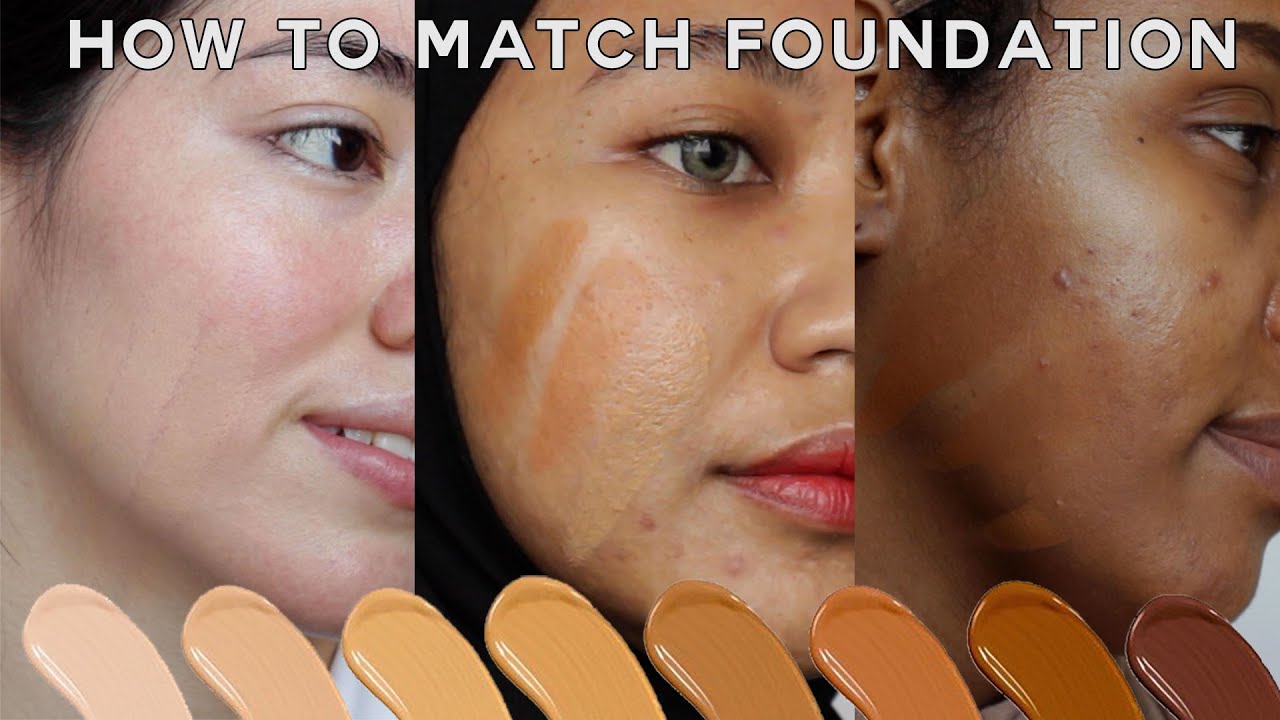
The best way? Compare yourself to the brand’s shade range chart (most apps and websites have them now).

Don’t guess by your hand or arm—those areas are usually 1–2 shades lighter than your face.
Step 3: The Gold-Standard Testing Method (No More Guessing)
Forget swatching on your hand or wrist. Here’s the professional way:
- Go to a window with natural daylight (no overhead lights).
- Apply 3–4 shades along your jawline and down your neck.
- Blend thoroughly and wait 5–10 minutes (foundation oxidizes and settles).
- The winner disappears into your skin with zero line of demarcation.
If it turns orange after an hour, it’s too warm or the formula oxidizes on you—try a different brand.

Bonus: Take a selfie in natural light after 30 minutes. If it still looks perfect, you’ve found your match.
Step 4: Leverage 2026 Tech for Instant Matches
Technology has completely changed the game:
- AI shade finders: Upload a selfie to Sephora’s Virtual Artist, Ulta’s app, or brand sites like Estée Lauder and MAC. They analyze your skin in seconds.
- Virtual try-on: See how the exact shade looks on your face in real time (works amazingly on phones now).
- In-store scanners: Many Sephora and Nordstrom locations have handheld devices that scan your wrist or cheek.


These tools are 95% accurate when used in good lighting—far better than guessing in harsh store lights.
Step 5: Factor in Skin Type, Finish & Formula
Your shade isn’t just about color—it’s about how the formula behaves on your skin:
- Oily skin → Matte or oil-control formulas (less likely to slide).
- Dry skin → Hydrating or luminous formulas (won’t cling to flakes).
- Combination → Natural-matte hybrids.
Test a small amount on your cheek for 8 hours. If it separates, oxidizes, or disappears, try a different texture from the same shade family.
Common Mistakes to Avoid in 2026
Testing under fluorescent lights (makes everything look yellow).
Matching only to your cheek (cheeks are often redder or tanner).
Ignoring oxidation (many drugstore foundations darken after 20 minutes).
Buying online without the brand’s shade finder.
Trendy Foundation Looks That Prove a Perfect Match Changes Everything
When your shade is right, your whole face comes alive. Here are fresh 2026 inspirations showing flawless, skin-like finishes:
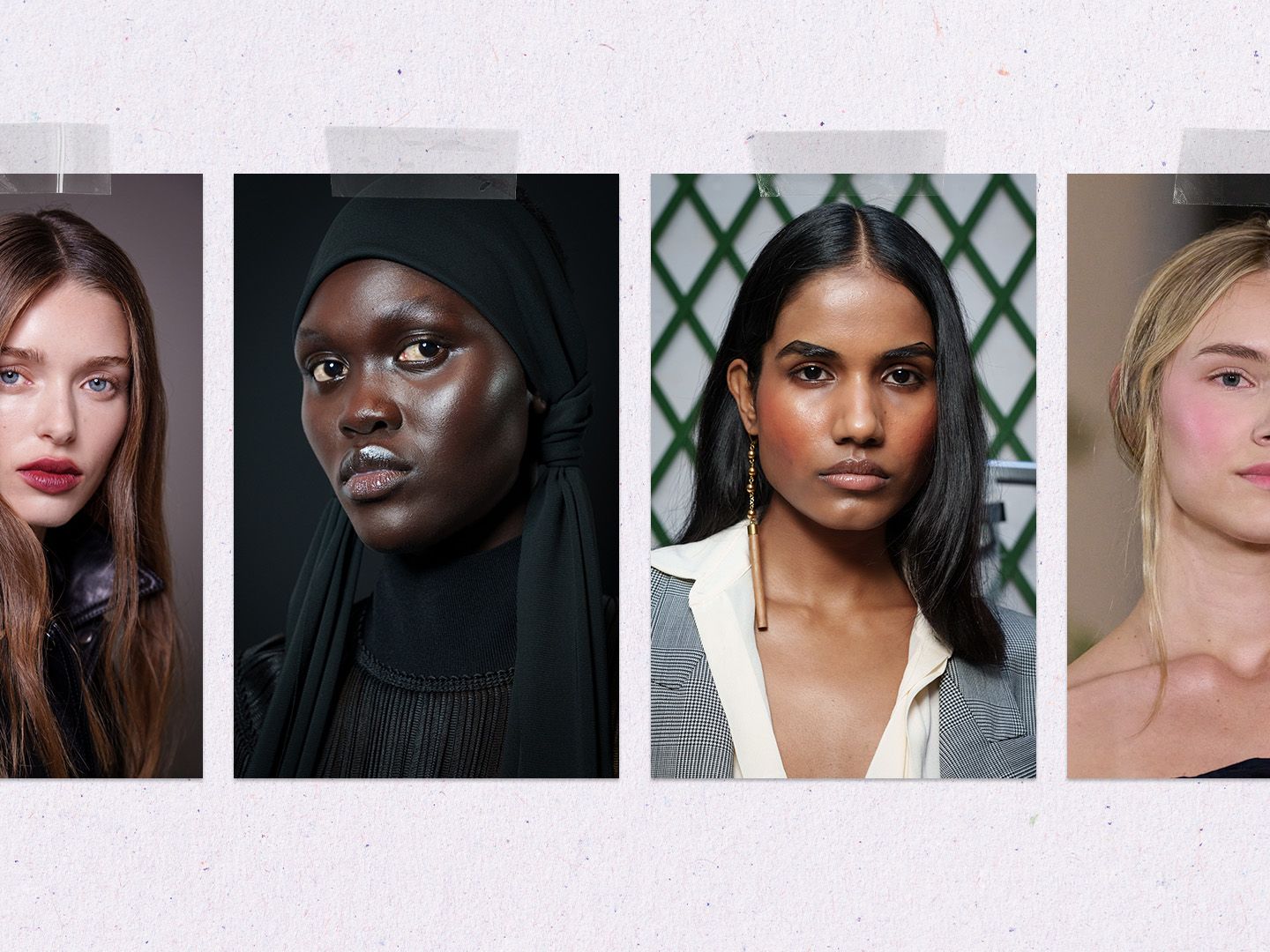

Notice how the foundation looks like glowing skin, not makeup? That’s the power of the right shade.
Final Pro Tips for Lasting Confidence
- Buy two shades (one for winter, one for summer) or mix them.
2. Set with a translucent powder only where needed.
3. Reassess every 6–12 months—hormones, sun, and age can shift how skin reflects light.
4. Support brands with wide, inclusive ranges. Representation matters.
Finding your perfect foundation shade isn’t about chasing trends—it’s about feeling like the best version of yourself every single day. With these steps, modern tools, and a little patience, you’ll never waste money on the wrong bottle again.
Ready to find yours? Grab a mirror, head to natural light, and start testing. Your skin will thank you.
Which step are you trying first? Drop your current foundation struggle or shade wins in the comments—I read every single one! ✨